



Altrient Liposomal Vitamin C and its Impact on Anti-Ageing
Independent clinical research by Aspen Clinical Research, 2013, ABUCUT1
Executive Summary
This report presents the findings of a double-blind, placebo-controlled, home-use clinical study conducted by Aspen Clinical Research Ltd on behalf of Abundance and Health Ltd. The study assessed the anti-ageing efficacy of ALTRIENT C, a liposomal vitamin C supplement, in improving the viscoelastic properties of facial skin in healthy adult volunteers.
Sixty subjects with ageing, non-firm skin were enrolled and completed the study, divided equally between an active treatment group (ALTRIENT C) and a placebo group. Skin firmness was measured objectively at baseline, Week 2, and Week 4 using the Cutometer® MPA 580 instrument. Subjective responses were captured at Week 4 via a Self-Perception Questionnaire.
Key Findings at a Glance
INCREASE IN SKIN FIRMNESS (WEEK 2)
INCREASE IN SKIN FIRMNESS (WEEK 4)
Skin firmness improved by 15.1% at Week 2 and 32.7% at Week 4 in the ALTRIENT C group, compared to no statistically significant change in the placebo group. These results were highly statistically significant (p<0.001), with all 30 treated subjects reporting a noticeable improvement in skin appearance and feel.
Background and Objective
As consumers seek scientifically validated cosmetic interventions, the demand for evidence-based substantiation of anti-ageing claims has grown substantially. ALTRIENT C is a liposomal oral vitamin C formulation developed to enhance bioavailability of ascorbic acid, which plays a critical role in collagen synthesis and extracellular matrix integrity. Topically applied creams have well-established limitations in skin penetration; a systemically delivered, highly bioavailable form of vitamin C represents an alternative approach to supporting dermal collagen production.
The primary objective of this study was to assess, under controlled conditions, whether daily oral consumption of ALTRIENT C for four weeks produced a measurable and statistically significant improvement in the viscoelastic properties (firmness and elasticity) of facial skin in healthy volunteers with ageing, non-firm skin, compared with a placebo.
Study Design and Methodology
Design Overview
The study was a single-centre, open, randomised home-use study with placebo control. Subjects attended the test centre at three time points: Week 0 (baseline), Week 2 (interim), and Week 4 (end of treatment). Between visits, subjects used the allocated product at home according to standardised written instructions.
Participant Selection
Sixty healthy adult volunteers were recruited. Eligibility required subjects to present with self-identified and clinically confirmed ageing, non-firm facial skin. Key exclusion criteria included active skin conditions at the test site (e.g. eczema, psoriasis, acne), pregnancy or lactation, significant systemic illness, current medication likely to affect the skin response, and allergy to vitamin supplements. During the study, subjects were prohibited from using any additional facial skincare products or from exposing their face to UV radiation in any form.
Test Articles
Subjects were randomly allocated to one of two groups of 30:
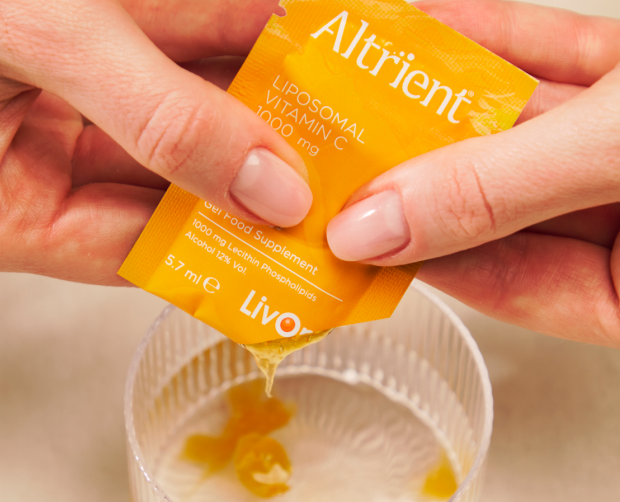
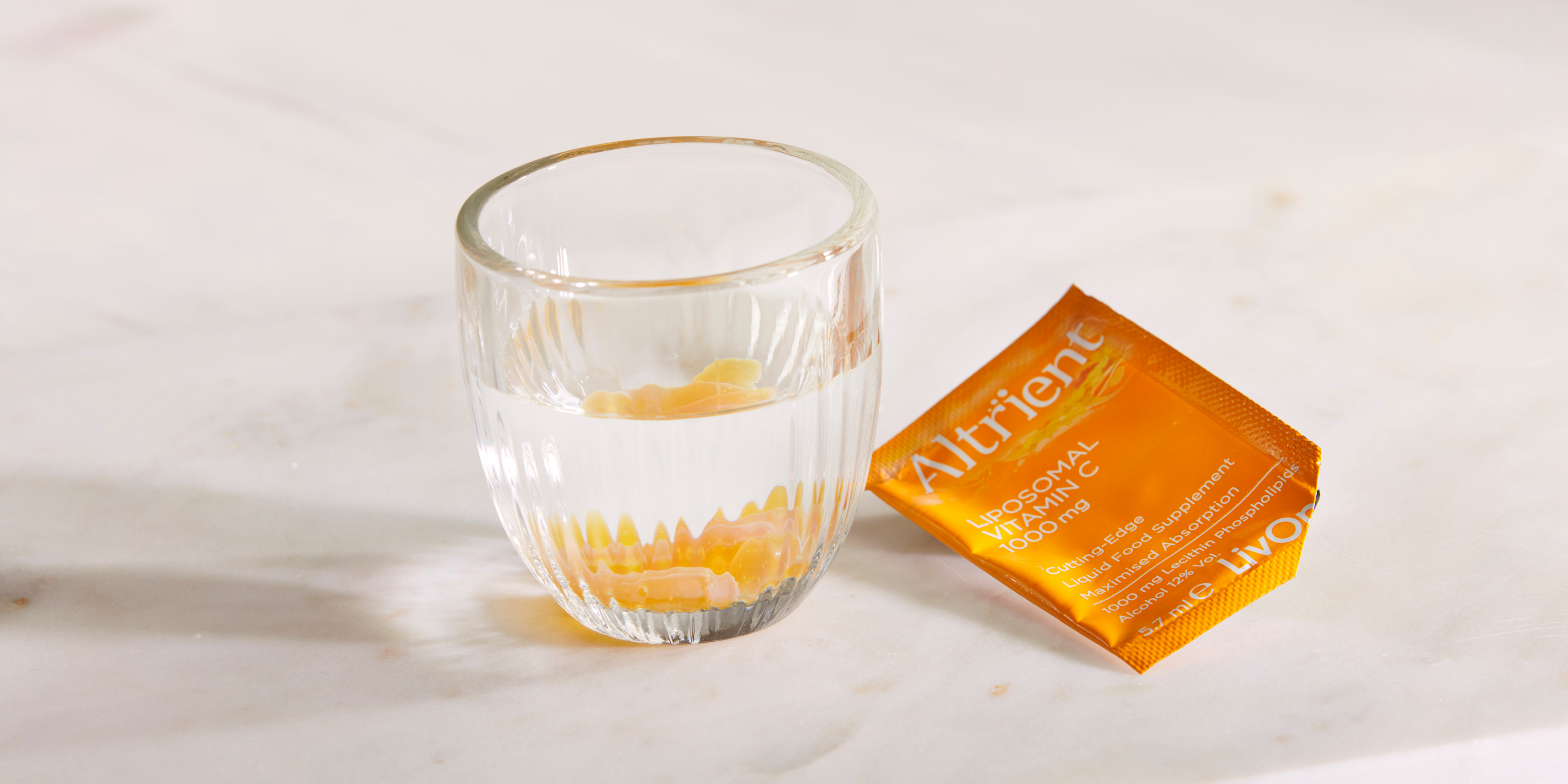
- Group A (Active) – ALTRIENT C: A liposomal vitamin C formulation containing 1g sodium ascorbate and 1g phospholipids (from soy lecithin) per serving, including phosphatidylcholine (500mg), phosphatidylethanolamine (144mg), and phosphatidylinositol (24mg), in an aqueous base with 12% w/w alcohol, xanthan gum, and EDTA.
- Group B (Control) – Placebo: An untreated comparator product.
Group A subjects consumed 2.5ml once on Day 1, twice daily from Day 2, escalating to three times daily at mealtimes for the remainder of the four-week period. Group B subjects consumed one sachet three times daily throughout the study.
Outcome Measurement
The primary outcome measure was skin viscoelasticity, assessed using the Cutometer® MPA 580 (Courage and Khazaka, Germany). This non-invasive device applies a controlled negative pressure to the skin surface and measures the depth of skin deformation using a non-contact optical system. The ratio of viscous to elastic deformation (Uv/Ue) was recorded at the cheek area at each visit. A lower Uv/Ue value reflects firmer, more elastic skin, while a higher value indicates greater laxity. The study measured the extent to which ALTRIENT C shifted this ratio compared to placebo.
Statistical significance was assessed using a paired Student t-test. A p-value below 0.05 was considered indicative of significance.
Results
All 60 subjects enrolled in the study completed all three visits. No adverse events or adverse reactions were recorded throughout the study period. There were no withdrawals.
Cutometer Measurements
Mean Cutometer (Uv/Ue) readings for the treated and untreated groups across all three time points are presented below.
| Group | Pre-Treatment (Baseline) |
Week 2 | Week 4 |
|---|---|---|---|
| ALTRIENT C (Active) | 0.548 (±0.030) | 0.631 (±0.013) | 0.727 (±0.016) |
| Placebo (Untreated) | 0.553 (±0.029) | 0.552 (±0.030) | 0.554 (±0.030) |
Table 1. Mean Cutometer Uv/Ue readings (standard deviations in parentheses) at baseline, Week 2, and Week 4.
The ALTRIENT C group demonstrated a progressive and substantial increase in Uv/Ue values from baseline through to Week 4, indicating a pronounced improvement in skin viscoelasticity. The placebo group showed no meaningful change across the same period, with values remaining stable between 0.552 and 0.554.
Statistical Analysis
| Comparison (Treated Group) | P-Value |
|---|---|
| Baseline vs Week 2 | 1.36 × 10⁻¹³ |
| Baseline vs Week 4 | 4.55 × 10⁻²⁴ |
Table 2. Student t-test results for the ALTRIENT C group.
Both comparisons returned p-values many orders of magnitude below the threshold of 0.05, confirming that the improvements observed in the ALTRIENT C group were highly statistically significant. The improvement from baseline to Week 2 was 15.1%, and from baseline to Week 4 was 32.7%. No statistically significant changes were observed in the placebo group.
Percentage Change Summary
| Timepoint | ALTRIENT C Group | Placebo Group |
|---|---|---|
| Baseline to Week 2 | +15.1% | –0.2% (no change) |
| Baseline to Week 4 | +32.7% | +0.2% (no change) |
Table 3. Percentage change in mean Uv/Ue from baseline.
Self-Perception Questionnaire Results
At the conclusion of the study (Week 4), all 60 subjects completed a Self-Perception Questionnaire (SPQ) to capture subjective assessments of the product's efficacy and acceptability.
The most commonly reported changes were general improvement (30 subjects), improved moisturisation (15), younger-looking skin (13), and a nourished feeling (10).
Further results for the active treatment group were uniformly positive:
of ALTRIENT C subjects reported a noticeable improvement in the appearance and feel of their facial skin.
of treated subjects said they would replace their current anti-ageing product with ALTRIENT C.
rated the product at level 4 out of 5 for change in skin appearance; 3% rated it at the highest level (5).
of subjects reported a marked increase (level 5 out of 5) in energy levels during the study period.
rated the product as Excellent overall; 33% rated it as Good.
Among subjects in the active group who reported their typical susceptibility to seasonal cold or flu (90% said they usually suffer at this time of year), only 37% experienced illness during the study period, all recovering within 1–4 days. All who fell ill during the study believed they recovered faster and experienced a less severe episode than usual — findings consistent with vitamin C's established role in immune support, though not a primary endpoint of this study.
In comparison, placebo group subjects reported more modest perceptual changes. Most rated their product at level 3–4 out of 5, with general improvement as the predominant reported change (27 subjects). No placebo subjects reported a feeling of younger-looking skin or reduced fine lines. Overall product rating was Good for all 30 placebo subjects, with none rating it Excellent.
Safety and Tolerability
ALTRIENT C was well tolerated throughout the four-week study period. No adverse events or adverse reactions of any classification — mild, moderate, severe, or serious — were recorded in either the active or placebo group. No subjects withdrew from the study. The absence of adverse events supports the safety profile of the test article for the intended consumer population.
Discussion
The results of this study provide compelling, statistically robust evidence that oral supplementation with ALTRIENT C produces clinically measurable improvements in skin firmness and elasticity over a four-week period. The mechanism is consistent with known physiology: vitamin C is an essential co-factor in the hydroxylation of proline and lysine residues required for stable collagen triple-helix formation. By delivering ascorbic acid via a liposomal carrier system, ALTRIENT C is designed to maximise systemic bioavailability, thereby supporting dermal collagen synthesis more effectively than conventional oral vitamin C preparations.
The magnitude of the observed effect — a 32.7% improvement in viscoelastic properties at four weeks — is clinically meaningful and well beyond the threshold of measurement variability, as demonstrated by the extremely low p-values (p<0.001 at both Week 2 and Week 4). The progressive nature of the improvement between Week 2 and Week 4 suggests that the effect is accumulative and likely to continue with sustained use. The placebo group's stable readings rule out confounding factors such as seasonal variation, measurement drift, or placebo effect on the objective instrument readings.
Subjective responses from the treated group reinforced the objective findings: all subjects perceived an improvement, and a majority found the effect sufficiently compelling to consider replacing their existing anti-ageing regimen entirely. The consistency between objective and subjective outcomes strengthens the overall evidence base.
The study does have certain limitations inherent to its design. As an open-label study, assessors were not blinded to group allocation, introducing the possibility of assessment bias at a procedural level, though the objective nature of the Cutometer readings mitigates this concern substantially. The relatively short duration means that long-term durability of the effect cannot be confirmed from this study alone. Additionally, the exclusion of individuals with active skin conditions means the findings may not generalise to all skin types.

Conclusion
This study provides strong and statistically significant evidence that ALTRIENT C improves skin viscoelasticity in adults with ageing, non-firm skin. After four weeks of use, subjects experienced a mean 32.7% improvement in skin firmness compared to baseline — a finding accompanied by a 15.1% improvement at the two-week interim assessment. The placebo group showed no meaningful change over the same period. No adverse events were recorded, and subject satisfaction was exceptional, with all treated participants reporting perceived skin improvement.
On the basis of these findings, the following product claims are fully substantiated by the data:
- "Clinically proven to increase skin firmness"
- "Firms skin by 32.7% in 4 weeks"
- "Firms skin by 15.1% in 2 weeks"
These results support the use of ALTRIENT C as an evidence-based anti-ageing supplement with quantifiable dermatological benefits, and provide a sound scientific foundation for marketing communications directed at consumers seeking clinically validated skin health solutions.
Featured in this study:
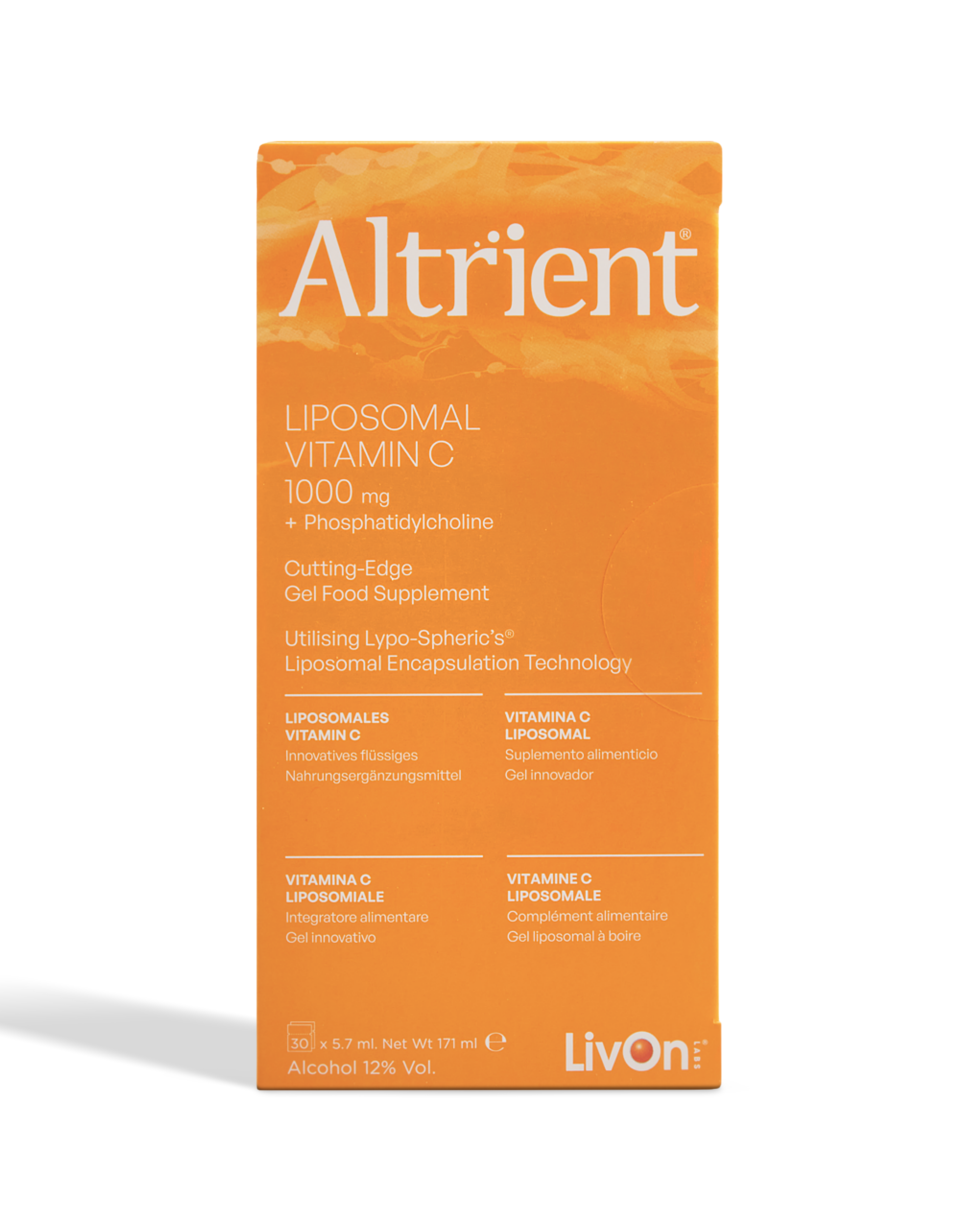
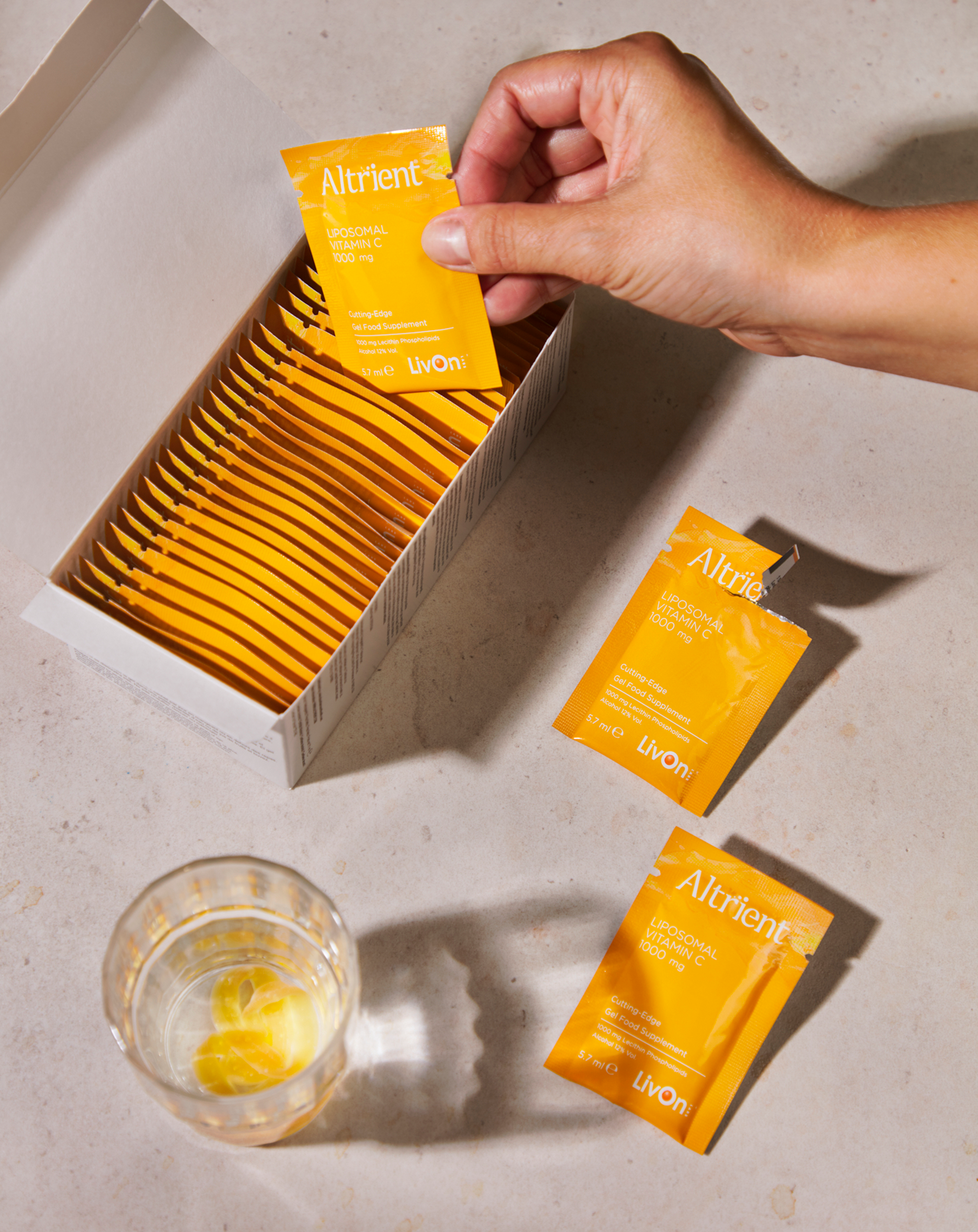
✓ 1000mg sodium ascorbate—a gentle form of vitamin C
✓ 500mg phosphatidylcholine for cellular health
✓ Just 5 ingredients
✓ Unflavoured, unsweetened
✓ Single sachets for optimised liposome stability
✓ Multi-award winning formula
✓ Triple-tested for potency + purity
Altrient C is naturally free from sugars, sweeteners, colours, flavours, glycerine, gluten, nuts, GMO ingredients, yeast, hexane, soy protein, dairy and other animal byproducts. It is 100% vegan-friendly.