



Altrient Liposomal Vitamin C and its Impact on Hair Health
Independant clinical research by Princeton Consumer Research, 2023 - ABUHAR1C
Abstract
This report presents the findings of an independent, single-centre, 12-week home-use clinical study evaluating the efficacy of Altrient® C (liposomal vitamin C; Lypo-Spheric®, LivOn Labs) on hair health outcomes. The study was conducted by PCR Corp under Good Clinical Research Practice (GCRP) guidelines and in accordance with the 1964 Declaration of Helsinki and its subsequent amendments, as well as ICH E6(R2) Guideline for Good Clinical Practice.
Fifteen subjects with thinning hair completed the study, undergoing expert clinical assessment, standardised Brush Friction Count Method (BFCM) analysis, and macrophotographic hair count at baseline and at week 12. Results demonstrated statistically significant improvements across five of six primary hair health outcomes (p<0.05), with reductions in both hair breakage and shedding of 50.89% and 37.50% respectively. Participant self-perception questionnaires confirmed high levels of subjective concordance with objective findings.
Background and Scientific Rationale
Vitamin C, available as ascorbic acid or buffered forms, is an essential water-soluble micronutrient with a well-established role in collagen biosynthesis. Collagen is a primary structural protein of the hair follicle, including the dermal papilla and the connective tissue sheath that surrounds the follicle. Adequate Vitamin C is required for the hydroxylation of proline and lysine, two amino acids critical to the formation of stable collagen triple-helix structures. Without sufficient Vitamin C, collagen integrity is compromised, which can manifest as increased hair fragility, thinning, and accelerated shedding.
Beyond collagen synthesis, vitamin C is a potent antioxidant that helps protect follicular cells from oxidative stress — a recognised contributor to premature hair ageing and follicle miniaturisation. Iron absorption is also mediated in part by vitamin C, and iron deficiency is one of the most common nutritional causes of diffuse hair thinning.
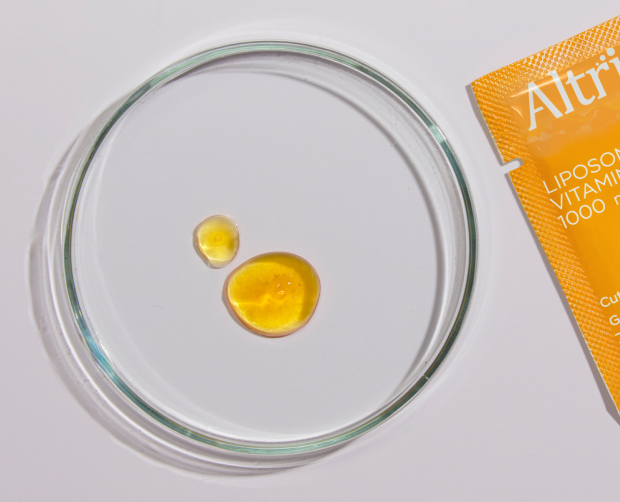
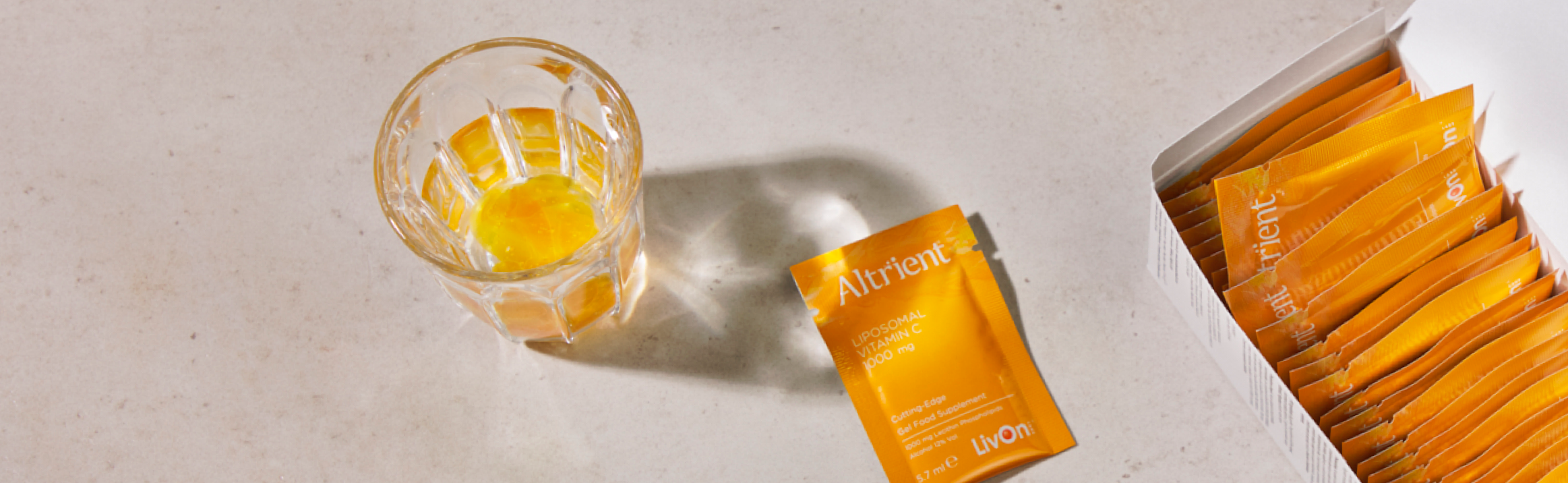
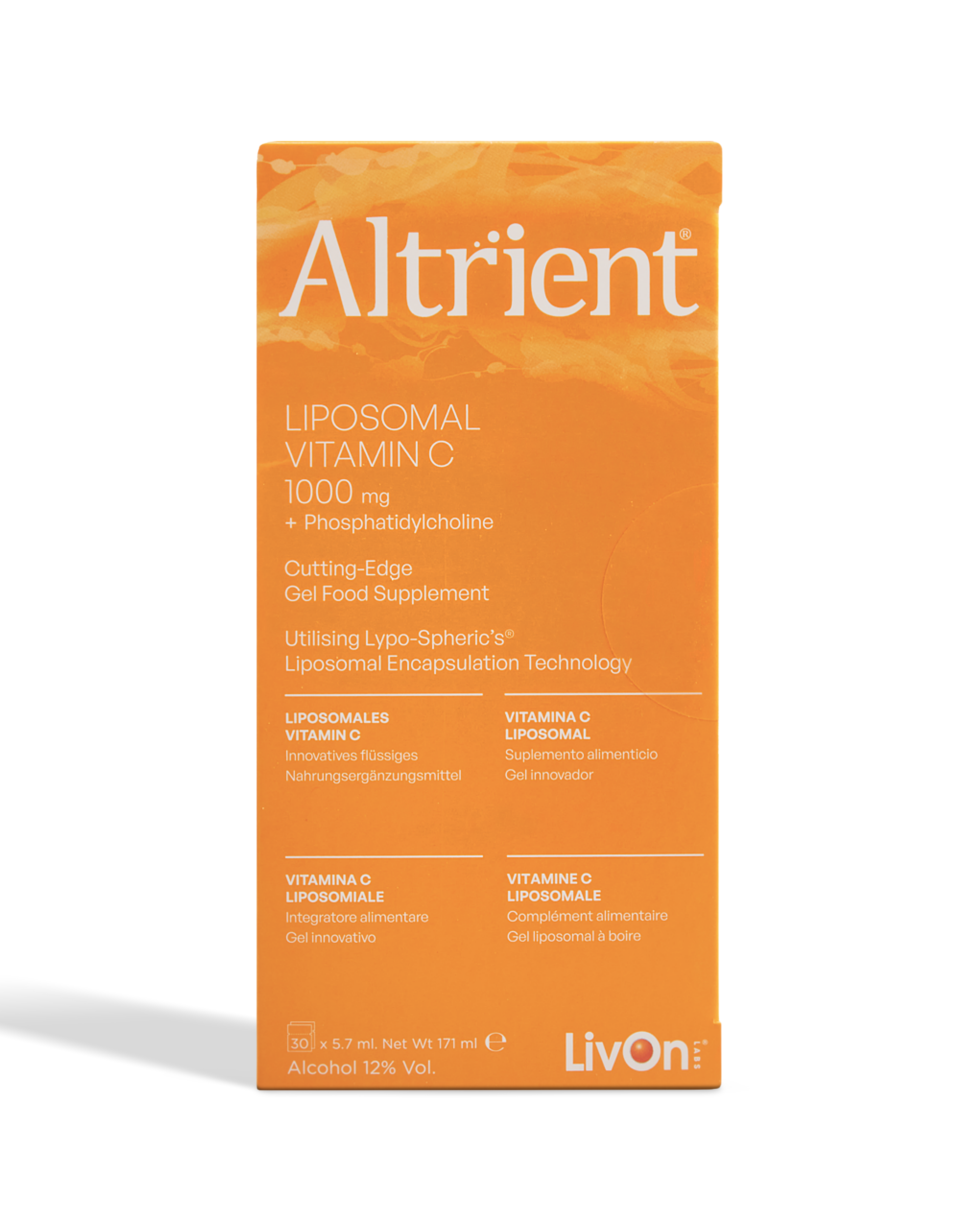
Standard oral vitamin C supplements face significant bioavailability limitations due to gastrointestinal absorption saturation and first-pass metabolism. Altrient® C uses liposomal encapsulation technology, in which vitamin C (as sodium ascorbate) is enclosed within phospholipid bilayer vesicles — mirroring the structure of cell membranes — to facilitate direct cellular uptake, bypassing conventional intestinal absorption constraints. Each sachet delivers 1,000 mg of vitamin C alongside 1,000 mg of phospholipids (of which 500 mg is phosphatidylcholine).
Study Design and Methodology
Study Overview
Study Type: Single-centre, home-use, open-label clinical study
Study Reference: PCR Corp Report No. ABUHAR1C
Sponsor: Abundance and Health Ltd. / Livon Labs
Testing Facility: PCR Corp, Chelmsford, Essex, United Kingdom
Study Duration: 12 weeks (5 June 2023 – 28 August 2023)
Ethics: Conducted in accordance with the Declaration of Helsinki (2013) and ICH E6(R2) Good Clinical Practice guidelines. Written informed consent was obtained from all participants prior to enrolment.
Subject Population
Fifteen subjects, aged between 21 and 66 years, were enrolled and completed the study. All subjects presented with self-assessed hair thinning at baseline. The following exclusion criteria were applied to ensure study integrity: use of hair growth products (e.g., minoxidil, finasteride) within the preceding 12 months; insulin-dependent diabetes; uncontrolled metabolic conditions; immunological disorders; and use of topical medications on the scalp. No adverse reactions were reported, and all 15 enrolled subjects completed the full 12-week protocol.
Test Article and Dosing
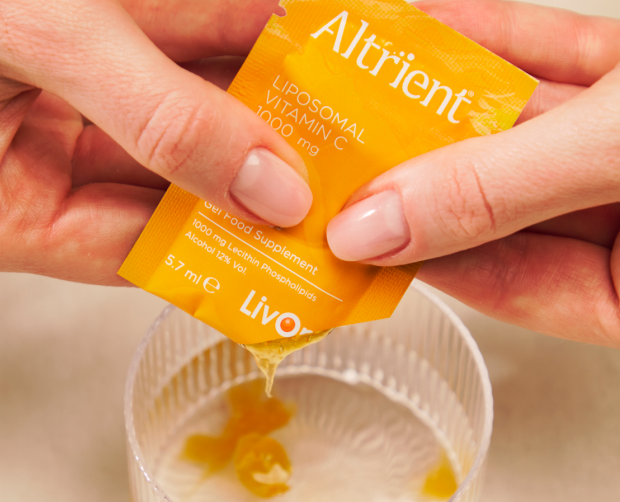
Subjects consumed two sachets of Altrient® C per day — one sachet in the morning and one in the afternoon — for the full 12-week period. Each 5.7 mL sachet contained 1,000 mg vitamin C (as sodium ascorbate), 1,000 mg phospholipids (including 500 mg phosphatidylcholine), citric acid, alcohol (ethanol 12% w/w), and deionised water. The product was taken orally, either directly or dissolved in a small volume of water or juice.
Subjects were instructed to maintain all existing cosmetic and hair care routines throughout the study and to refrain from introducing any new supplements, hair treatments, chemical processes, or hair-altering procedures during the study period.
Assessment Methods
All assessments were conducted at baseline (day 1) and at week 12 (day 84) by the same trained evaluator, using standardised conditions.
Expert Clinical Grading: A validated ordinal grading scale (0–5) assessed hair strength/damage, thickness of hair (overall and individual strand), healthy appearance, general condition/feel, and hair growth length. Assessments were performed under a standardised 60-watt pearl bulb at approximately 30 cm distance.
Brush Friction Count Method (BFCM): Participants’ hair was brushed with moderate force at one stroke per second for 10 seconds using a standardised large paddle brush. Hairs captured were examined under 2× magnification and categorised as either broken/damaged or intact (shed from the scalp). Total counts for each category were recorded at both timepoints.
Macrophotography Hair Count: A 2 cm × 2 cm region of thinning was designated at baseline and photographed at baseline and Week 12 using a Nikon D5500 camera (ISO 200, 1/125s, F20). Hair count within the fixed area was determined by the evaluator from standardised high-resolution images.
Self-Perception Questionnaires (SPQ): Subjects completed a 20-item Likert-scale questionnaire at Week 12, rating their agreement with statements covering hair quality, scalp health, and skin changes. Results are reported as the percentage of subjects selecting the top two responses (Agree or Strongly Agree).
Statistical Analysis
All outcomes were assessed for within-group change using paired statistical analysis comparing Week 12 values to baseline. Statistical significance was set at p<0.05. P-values for clinical grading and BFCM outcomes were reported to two decimal places, with values reaching significance recorded as p=0.00 (indicating p<0.005). Hair growth length did not reach the significance threshold (p=0.07).

Results
Clinical Grading — Expert Visual Assessment
The table below presents mean scores at baseline and Week 12 across all expert-assessed hair attributes. Lower scores denote improvement for damage, thickness, appearance, and condition measures; higher scores denote improvement for macrophotography hair count.
| Outcome Measure | Baseline Mean |
Week 12 Mean |
% Change | Mean Diff. | p-value |
|---|---|---|---|---|---|
| Hair Strength / Damage | 3.13 | 2.27 | -27.66% | -0.86 | <0.05* |
| Hair Thickness (Overall & Individual) | 3.13 | 2.50 | -20.21% | -0.63 | <0.05* |
| Healthy Appearance of Hair | 2.93 | 2.20 | -25.00% | -0.73 | <0.05* |
| General Condition / Feel of Hair | 3.20 | 2.23 | -30.21% | -0.97 | <0.05* |
| Hair Count (Macrophotography) | 23.60 | 28.07 | +18.93% | +4.47 | <0.05* |
| Hair Growth Length (cm) | 3.20 cm | 3.80 cm | +18.75% | +0.60 cm | p=0.07 |
* p<0.05 — statistically significant. Scoring scales: Hair Strength/Damage and Thickness (0=best, 5=worst); Healthy Appearance and General Condition (0=best, 5=worst); Macrophotography Count = number of hairs counted in a fixed 2 cm × 2 cm area.
All five primary clinical endpoints reached statistical significance (p<0.05). The most pronounced improvement was observed in General Condition and Feel of Hair, which improved by 30.21% from a baseline mean of 3.20 (SD ±0.77) to 2.23 (SD ±0.65) at Week 12. Hair strength showed a 27.66% improvement (3.13 to 2.27), and Healthy Appearance improved by 25.00% (2.93 to 2.20). Notably, hair thickness improved by 20.21%, and the visible hair count within the designated macrophotographic test area increased by 18.93%, from a mean of 23.60 hairs (SD ±6.60) at baseline to 28.07 hairs (SD ±7.18) at Week 12.
Hair growth length showed a positive trend of 18.75% (baseline mean 3.20 cm, Week 12 mean 3.80 cm); however, this change did not achieve statistical significance (p=0.07) within the 12-week observation period.
Brush Friction Count Method (BFCM)
The BFCM provided an objective, standardised measure of both structural hair breakage and scalp shedding. Results demonstrated highly significant reductions in both measures:
| Measure | Baseline Mean (SD) |
Week 12 Mean (SD) |
% Reduction | p-value |
|---|---|---|---|---|
| Broken Hairs | 7.47 (±2.26) | 3.67 (±1.63) | -50.89% | <0.05* |
| Intact Hairs (Shed) | 10.67 (±4.35) | 6.67 (±3.42) | -37.50% | <0.05* |
* p<0.05 — statistically significant. SD = Standard Deviation.
Broken hair count was reduced by 50.89%, from a baseline mean of 7.47 (SD ±2.26) to 3.67 (SD ±1.63) at Week 12 (p<0.05). The count of intact hairs lost during brushing — indicating scalp shedding — was reduced by 37.50%, from a mean of 10.67 (SD ±4.35) to 6.67 (SD ±3.42) at Week 12 (p<0.05). These findings demonstrate a statistically significant strengthening of the hair shaft and a meaningful reduction in overall hair loss as assessed under controlled conditions.
Self-Perception Questionnaire Results
Participant responses at Week 12 demonstrated strong subjective concordance with the objective clinical findings. Under Clearcast substantiation guidelines, claims supported by ≥70% agreement are considered substantiated. All 20 SPQ items recording results at or above the 60% threshold are listed below:
| Self-Perception Statement | % Agree / Strongly Agree |
|---|---|
| My skin is more hydrated | 100.00% |
| My hair looks more lustrous overall | 93.33% |
| My hair feels thicker overall | 86.67% |
| My hair thinning has decreased | 86.67% |
| I have noticed an increase in new hair strands | 86.67% |
| My hair growth rate has improved | 86.67% |
| My hair breakage has decreased | 73.33% |
| My scalp is less visible along the hairline | 73.33% |
| My hair shedding (fall) has decreased | 66.67% |
Of particular note: 100% of participants reported improved skin hydration; 93.33% reported hair looking more lustrous; and 86.67% reported independently that hair felt thicker, that thinning had decreased, that new hair strand growth was visible, and that hair growth rate had improved. These subjective findings align closely with the objective BFCM and clinical grading outcomes, strengthening the overall robustness of the evidence base.
Conclusions
This independent 12-week clinical study provides statistically significant evidence that daily supplementation with Altrient® C liposomal Vitamin C produces measurable improvements across multiple dimensions of hair health. Five of six primary clinical endpoints achieved statistical significance (p<0.05), with improvements ranging from 18.93% (hair count) to 30.21% (general hair condition). The BFCM data demonstrated a 50.89% reduction in broken hairs and a 37.50% reduction in intact hair shedding, both statistically significant.
The convergence of objective clinical grading, instrument-based BFCM measurement, macrophotographic hair counting, and high participant self-perception agreement provides a multi-modal evidence base that substantiates the following claims under Clearcast guidelines:
- Clinically proven to improve hair strength and reduce breakage
- Clinically proven to improve hair thickness and condition
- Clinically proven to reduce hair shedding
- Clinically proven to increase visible hair count
- Supports improvement in hair growth
No adverse events were recorded across the full study cohort. The safety profile observed in this study is consistent with established Vitamin C supplementation literature.
Study Reference
Full Report: PCR Corp Clinical Study Report No. ABUHAR1C
Title: A Single Centre, Home-Use Study in 15 Healthy Subjects to Evaluate the Efficacy of Using a Supplement via Clinical Assessment, Brush Friction Count Method (BFCM) and Self-Perception Questionnaires (SPQ) Over a 12-Week Duration
Sponsor: Abundance and Health Ltd. / Livon Labs
Testing Facility: PCR Corp, Chelmsford, Essex, UK
Principal Investigator: Barrie Drewitt
Final Report Date: 27 September 2023
Ethics Framework: Declaration of Helsinki (2013); ICH E6(R2) Good Clinical Practice
Featured in this study:
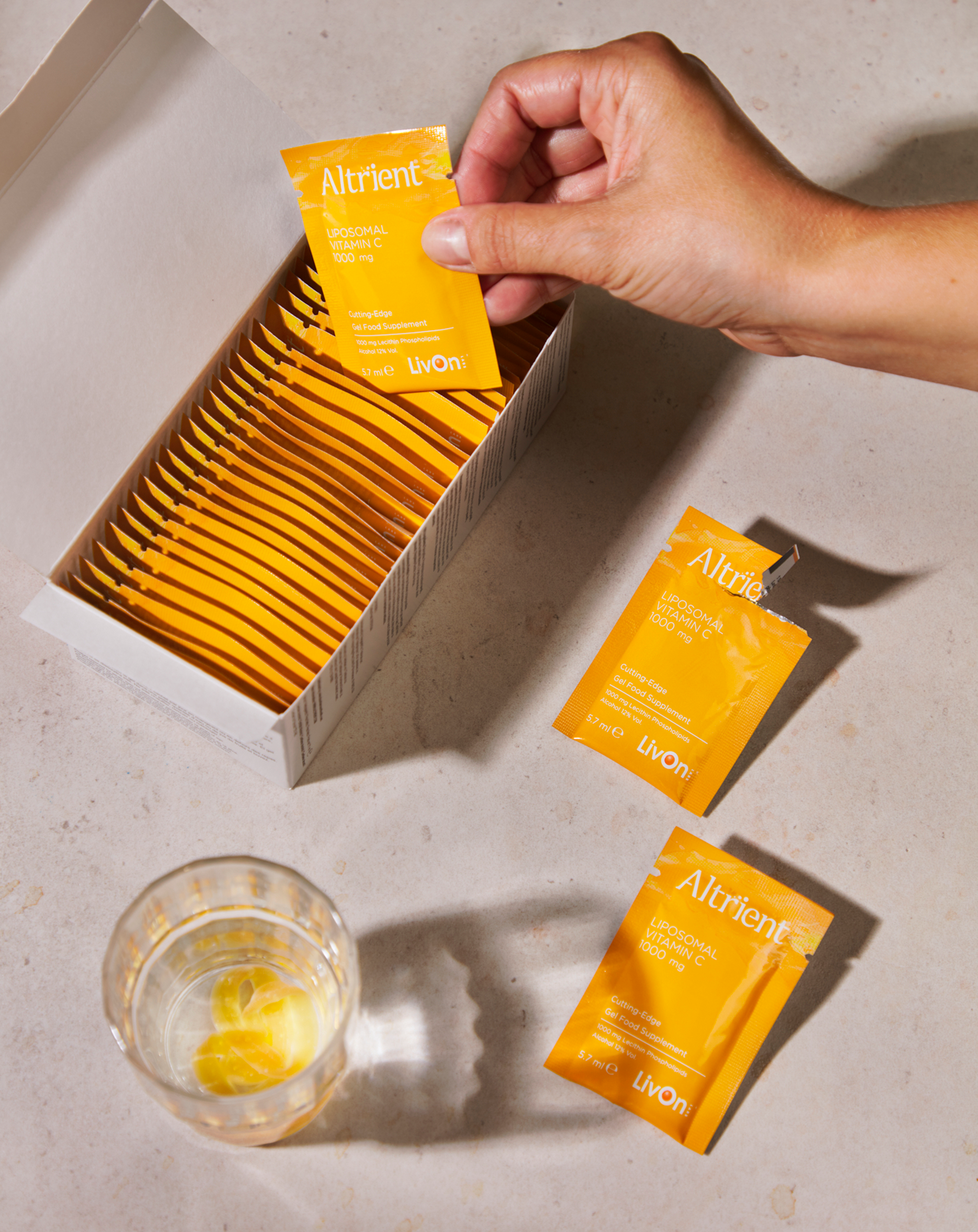
✓ 1000mg sodium ascorbate—a gentle form of vitamin C
✓ 500mg phosphatidylcholine for cellular health
✓ Just 5 ingredients
✓ Unflavoured, unsweetened
✓ Single sachets for optimised liposome stability
✓ Multi-award winning formula
✓ Triple-tested for potency + purity
Altrient C is naturally free from sugars, sweeteners, colours, flavours, glycerine, gluten, nuts, GMO ingredients, yeast, hexane, soy protein, dairy and other animal byproducts. It is 100% vegan-friendly.